World War II
The FriendWorld War II enters the narrative not as a broad account of military campaigns but through two episodes in which human violence reaches animals. One war death leaves a dog waiting for an absent owner; another wartime memory centers on a guard’s cruelty to a duck. Together, the stories frame the war as a setting in which animal suffering exposes the limits and obligations of human sympathy.
Fido and the Missing Owner
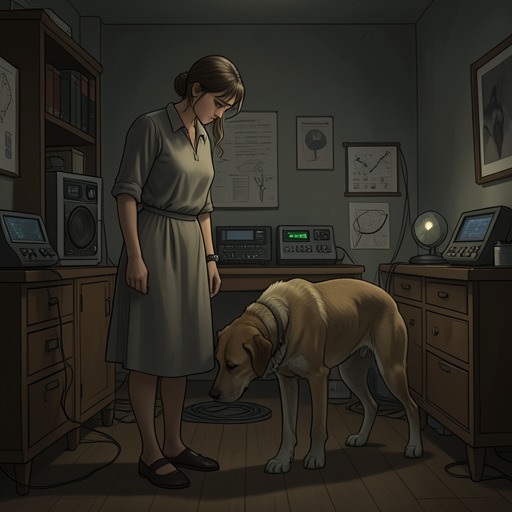
Fido, a dog from a town near Florence, Italy, had waited at a bus stop each day for fourteen years for his owner to return from work. The account explains that the owner died in an air raid during World War II. With that death, the familiar arrival Fido continued to expect became impossible, though the dog’s daily vigil endured.
The narrative places Fido among celebrated examples of canine loyalty, but his story also makes the war’s consequence intimate and domestic: an air raid takes a person from an ordinary journey home, while the surviving dog remains bound to the routine they shared. The account does not explain what Fido understood about the death; its emphasis is on the persistence of his waiting.
Zamperini’s Wartime Memory
The second reference concerns Louis Zamperini, an Olympic athlete and U.S. Army airman who was a prisoner of war in Japan during World War II. Among the terrible memories of his ordeal, he was most haunted by a guard torturing a duck. The narrative gives no further account of the incident, but its place in Zamperini’s memory makes the duck’s suffering a striking measure of what remained with him from captivity.
Unlike Fido’s story, which follows a dog’s repeated response to a death, Zamperini’s account focuses on a human witness remembering violence against an animal. In both, the war’s effects reach beyond combatants: the animal is exposed to human actions, while the human or animal survivor carries the consequences in a different form.
Animal Suffering and the Meaning of War
These brief wartime references belong to a wider reflection on why animal suffering can be especially difficult for people to accept. The narrator considers the helplessness of animals, who cannot know why they are in pain, and connects the pity they evoke to memories of human vulnerability in early life. In that frame, the duck’s suffering is not incidental to the account of war: it becomes a test of whether people can recognize cruelty toward a creature with little power to resist it.
The two stories offer distinct forms of aftermath. Fido’s fourteen-year vigil makes loss visible as continued expectation; Zamperini’s memory makes an act of cruelty persist in the mind of someone who endured captivity. The narrative uses these episodes to direct attention away from a general account of the war and toward the particular lives and suffering that historical violence leaves in its wake.